
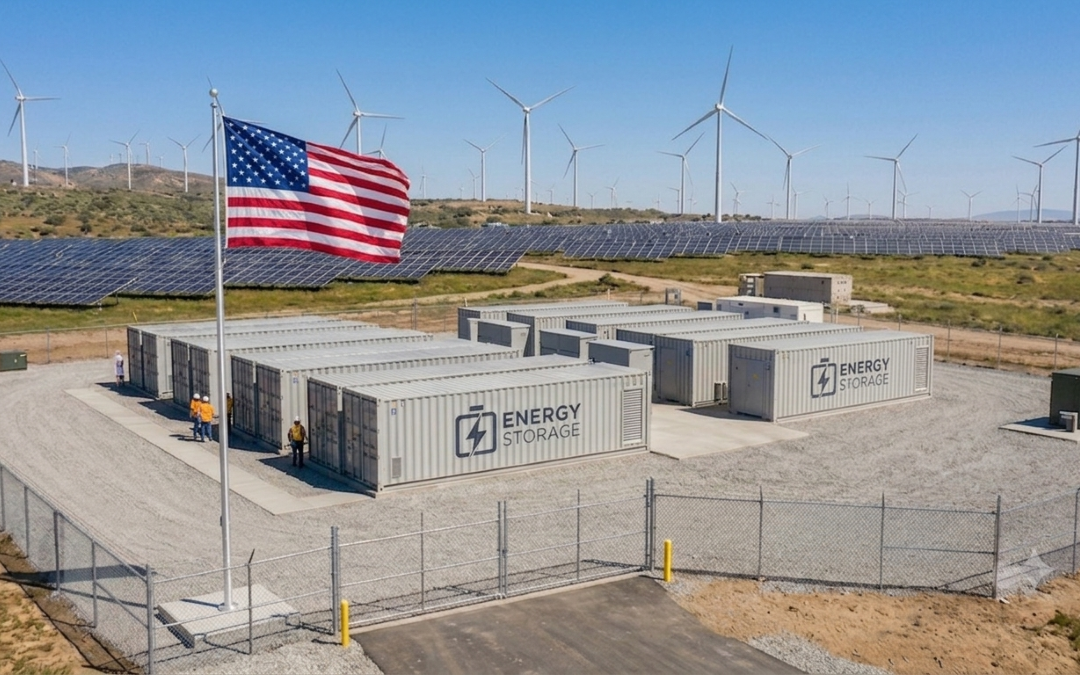
At 250 years, energy independence, global AI leadership, and military dominance are the American orders of the day. Aqueous energy storage is critical to achieving all three.
By Onas Bolton, PhD / Founder and CEO, Octet Scientific
__________________
If you’re making a list of classic American energy tech, aqueous energy storage – batteries that run on water combined with common metals such as iron, zinc, and lead – should rank high. Thomas Edison himself patented a nickel-zinc battery way back in 1901. Edison also designed nickel-iron batteries for Baker Motor Vehicle Company – a pioneer in electric-powered vehicles with cars said to have set 100 mph records, sold to presidents and kings, and manufactured in Cleveland, Ohio.
And with the U.S. coming up on its 250th year, the country should look deeper into how these technologies and American energy can grow together. For some of America’s most crucial energy challenges – including energy independence, the growing energy demands of AI, and the quest for the most advanced military in the world – aqueous-based batteries provide the answer to the problems our country faces.
Below, I’ll explain why aqueous storage tech should be a critical priority for our country’s next era.
 |
 |
Left: the Baker Motor Vehicle Company's 1904 Surrey.
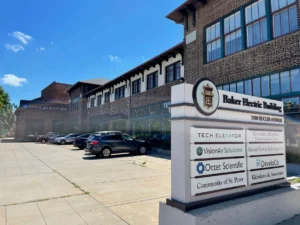
Right: the Baker Electric Building (and Octet headquarters) in Cleveland, Ohio.
Materials Abundance for Supply Chain Independence
As the recent closure of the Strait of Hormuz shows, relying on energy materials sourced from afar puts our energy economy at risk here at home. The need for greater energy control has many looking away from fossil fuels and toward renewables instead.
But renewables alone won’t guarantee independence. Renewable power relies on batteries, and much of the battery market is dominated by lithium-ion – which is dominated by China. Analysts forecast that China will control about half of the global lithium market and 81% of lithium refining activity by 2027, not to mention similar dominance is every other part of the battery. Chinese players like CATL are also relying on the country’s lithium know-how to take the lead in sodium-ion as well.
Aqueous-based batteries are an area where the U.S. can take the lead. Unlike lithium, the raw materials for most aqueous batteries are readily available in the U.S., and often already deeply integrated in U.S. production. For just a few examples:
- The U.S. produced 38 million metric tons of usable iron ore in 2025 – placing it among the top 10 iron producing nations globally.
- The U.S. is the world’s fourth-largest zinc producer, and one the world’s largest zinc mines is in northwest Alaska. Additionally, as zinc battery developers including Enzinc and Aesir have both shown, zinc battery manufacturing can be scaled quickly by leveraging existing lead-acid production plants and methods.
- The U.S. has the highest lead-acid battery recycling rate globally (roughly 99%), is home to the world’s largest lead-acid manufacturer (Clarios), and we’re the third-largest lead producer globally.
We already have the materials and infrastructure to support a robust aqueous battery industry here in the U.S. It’s not something we need to “reshore” or wrest back from China. Domestic sourcing and production is already here – we just need to scale it.
Faster AI Buildouts
AI and compute dominance will be a deciding factor in U.S. strength in the coming decades. Crucial to AI leadership is the ability to support data center buildout at breakneck speed — but also, ideally, in ways that will be reliable, lasting, and sustainable.
Again, clean energy sources such as solar make the most sense for a variety of commercial and health reasons.
Supporting these renewables with aqueous batteries — both inside the data center with UPS/backup systems, and outside it with grid-level storage — is the best plan for building an American AI future that doesn’t rely on foreign supply or pose serious hazards.
Today, aqueous’s chief advantage stems from fire safety. Unlike inherently combustible lithium and sodium tech, aqueous batteries present no thermal runaway risk. That lower risk means lower insurance premiums, simpler fire-code compliance, fewer siting restrictions, less mitigation overhead, and a dramatically reduced chance of catastrophic equipment loss and local health emergencies.
Additionally, at end-of-life, most aqueous technologies are readily recyclable — even as lithium battery recycling still faces major hurdles. Finally, the drastic price difference in electrolyte materials put much of the economics in aqueous’ favor. Lithium-ion, after three decades of development, is celebrating prices dipping below $70/kWh (in China). Contrast that milestone with iron-air battery developer Form Energy’s anticipated costs of just $20-$30/kWh.
All this is why it makes sense that the world’s most advanced, profit-driven companies are looking to aqueous batteries for data center use. Google, Xcel Energy, and iron-air battery firm Form Energy signed a $1B / 300 MW/30 GWh data center partnership this February. Abroad, Hong Kong based electronics giant Gold Peak Technology Group Limited has launched a zinc-based battery for the data center market, while Japanese telecom giant SoftBank is investing big into a line of zinc-halogen batteries promising $637 million in annual revenue by fiscal 2030. As a sign of how quickly aqueous batteries are being embraced by the AI market: ZincFive, a battery provider for data center infrastructure on the verge of going public, saw revenues double from 2024 to 2025.
The market’s first movers have clearly understood aqueous batteries’ role in the data center landscape. It would be wise for developers throughout the U.S. to follow their lead.
Storing Energy for a Modern Military
As the U.S. military seeks to stay at the forefront amid geopolitical changes and technology advances, it needs energy sources that are readily available, don’t pose flammability risks that could harm soldiers or destroy combustible materiel, enjoy uncompromisable supply chains, and that lend themselves to independent installations from microgrids to submarines. Again, aqueous energy storage is the obvious choice.
Indeed, the U.S. military is actively exploring cutting-edge aqueous storage solutions today. The U.S. Defense Logistics Agency has specifically touted the military’s partnership with nickel-zinc innovator Aesir Technologies – and describes the tech’s inherent safety, high energy density, capability and power as a potent combination for submarine operations and deploying more electronics in the field. Meanwhile, fellow nickel-zinc innovator Enzinc – developed out of technology licensed from the U.S. Naval Research Laboratory and validated in a U.S. DOE ARPA-E award – is under consideration by the U.S. Navy for submarine and other defense applications. Safe batteries, made in the U.S.A.
Given these advantages – and particularly with the Government wary of Pentagon reliance on foreign technology – the adoption of aqueous energy storage is no surprise. A move to aqueous alternatives gives the US military domestic options with vast untapped potential.
As our country heads halfway into its third century, it’s incumbent on government and business leaders alike to embrace technologies that move us ahead in energy independence, AI infrastructure, and military prowess. It’s time to finish what Thomas Edison and the Baker Electric began. By fully embracing aqueous energy storage, we can use American raw materials and innovation to help bring the country safe, secure energy for the next 250 years.