
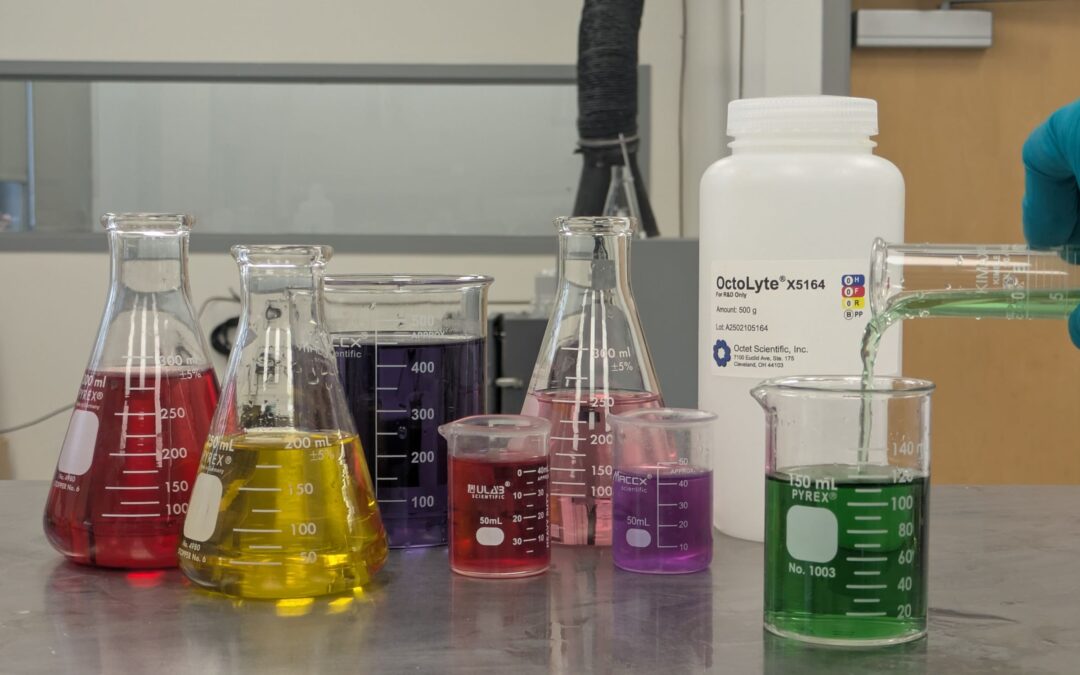
Dendrite short-circuiting had brought this zinc system developer’s R&D to a halt. With targeted iterations through nearly 30 additive candidates, Octet helped clear the way.
The Challenge: Dendritic Growth Blocked Development
For an early-stage zinc near-neutral energy storage developer, dendritic growth on the anode was causing cells to short-circuit before the team could meaningfully evaluate the larger system.
Dendritic failure was so common that there was no signal to read on the cathode side, and the product couldn’t move forward until this plating morphology issue was solved.
The company turned to Octet for help.
Octet’s Process: 30 Additives, Near-Doubled Cycle Life
To find the right candidate quickly, Octet screened nearly 30 additives using aggressive cycling (abuse tests) in a half-cell system — conditions specifically designed to surface failure modes fast, and to separate strong candidates from marginal ones.
Through the process, one clear additive candidate emerged. The winning additive moved cycle life in lab testing from 143 cycles to 281 — a 97% increase.
| Control | Octet Additive 1 | |
| Cycle Life (Lab Test) | 143 | 281 (+97%) |
| Failure Mode | Short Circuit (dendrite) | Passivation |
Aggressive cycling (abuse test) in half-cell system
Impact: The Additive to Bring Development Back on Track
As a result of Octet’s work removing the plating hurdles, the company moved from TRL 3 to TRL 5.
And with the customer ready to integrate the additive into their electrolyte, the team was in position to evaluate their cathode, understand their remaining challenges, and pursue real product development.
The takeaway: Cell challenges like dendrites and parasitic side reactions don’t have to block your path to commercialization. For targeted electrolyte chemistries that can help unstick your technology’s development, talk to Octet.
Ready to unlock efficiency gains in your aqueous battery system?
Schedule your Octet consultation now.
TALK TO OCTET